
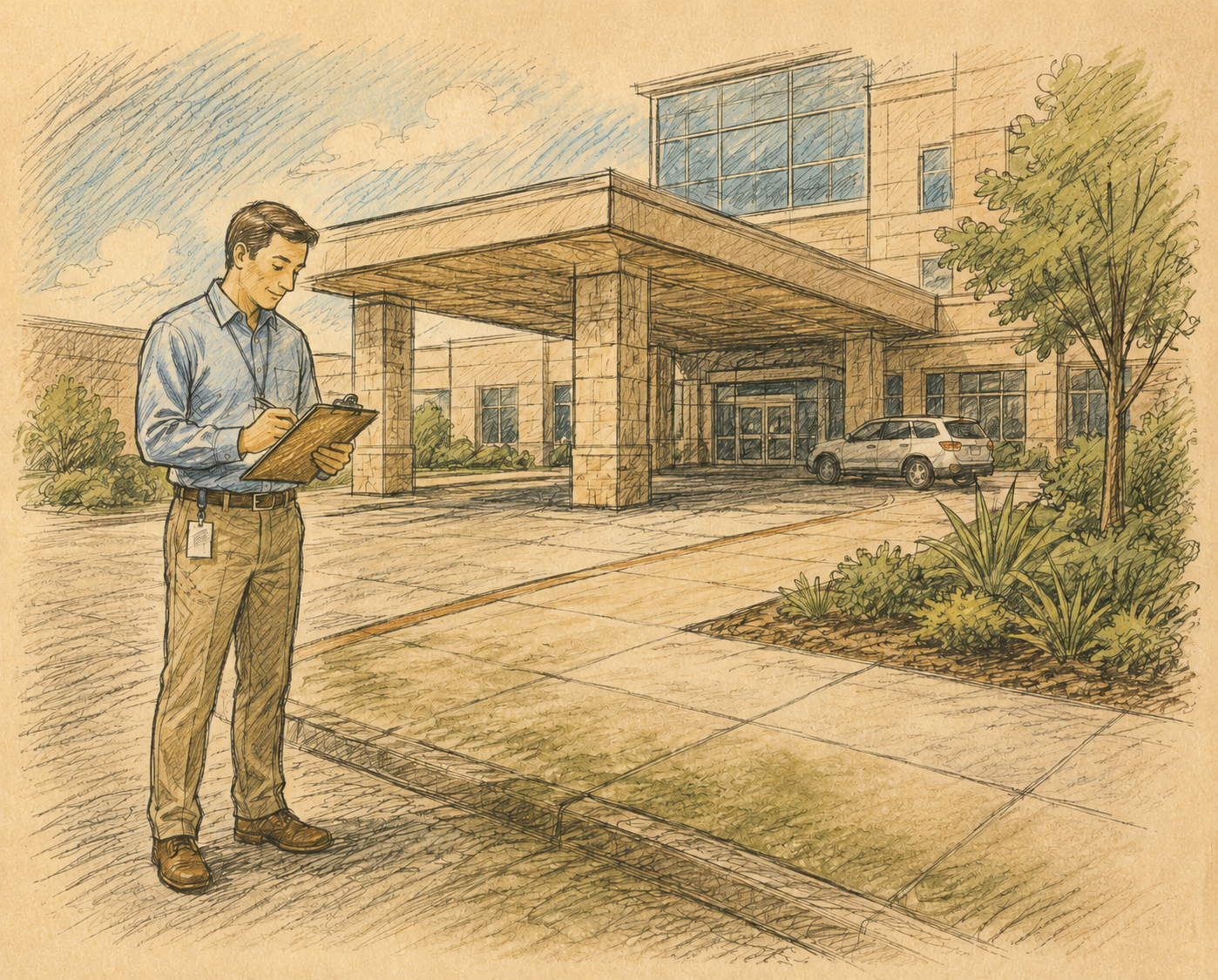
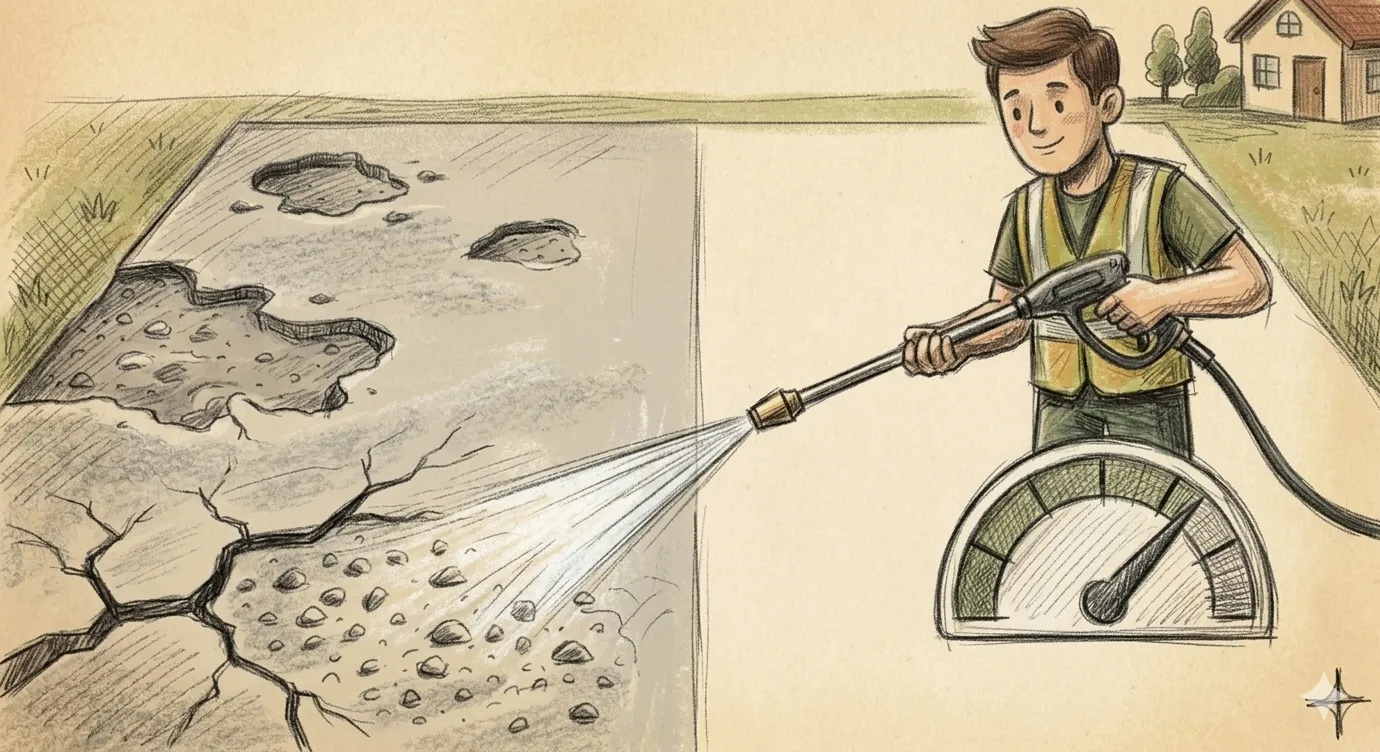
Every year, hospital facilities directors field unannounced surveys, chase accreditation renewals, and manage inspection checklists that stretch across dozens of departments. Interior infection control gets the spotlight. Sterilization protocols get the budget. But one area quietly accumulates risk with every passing season—the exterior of the building itself.
Cracked, stained, algae-covered sidewalks. Bio-film building up on entryway concrete. Mold growth on covered patient drop-off zones. These aren’t just aesthetic problems. In Texas, they are potential regulatory deficiencies—ones that surveyors are trained to notice the moment they step out of their car.
This article breaks down exactly what the law requires, which regulatory bodies are watching, and what industry standards say about how often hospital exteriors should be professionally cleaned.
There Is No Magic Number – But There Is a Legal Standard
Let’s address the most common question first: is there a Texas law that says hospitals must pressure wash every 90 days?
No. No regulation specifies an interval by name.
What Texas law and accreditation standards do require is an outcome—and that outcome has teeth. The obligation to maintain a clean, safe, and sanitary exterior is written into Texas administrative code, federal conditions of participation, and Joint Commission accreditation standards. Failure to meet that outcome—regardless of how often you wash—is a citable deficiency.
Texas Law: What the Administrative Code Actually Says
26 TAC Chapter 505 – Hospital Licensing
Texas hospital licensing rules are governed by the Texas Health and Human Services Commission (HHSC) under Texas Administrative Code Title 26, Part 1, Chapter 505 (formerly 25 TAC Chapter 133, administratively transferred in January 2025). This is the foundational licensing framework for general hospitals operating in the state.
The housekeeping and maintenance standards embedded throughout Chapter 505 require hospitals to maintain their physical plant—including exterior surfaces and grounds—in a safe and sanitary condition. The code establishes that the physical environment must not present hazards to patients, staff, or visitors, and that facilities must be kept clean and in good repair.
26 TAC § 550.210 – Sanitation, Housekeeping, and Linens
This provision, which applies to prescribed pediatric extended care centers but reflects the uniform standard used across Texas healthcare facility code, states explicitly:
“A center must ensure the provision of housekeeping and maintenance of the interior, exterior, and grounds of the center in a safe, clean, orderly, and attractive manner.”
“Center grounds must be well kept and the exterior of the building, including sidewalks, steps, porches, ramps, and fences, must be in good repair.”
“The center must be kept free of offensive odors, accumulations of dirt, rubbish, dust, and hazards.”
26 TAC § 554.323 – Housekeeping Services (Nursing Facilities)
For nursing facilities, the obligation is stated even more directly:
“The facility must provide sufficient housekeeping and maintenance personnel, equipment, and supplies to maintain the interior, exterior, and grounds of the facility in a safe, clean, orderly, and attractive manner.”
26 TAC § 550.1219 – Maintenance
This section reinforces the exterior obligation across healthcare settings:
“A center must ensure that the grounds and the exterior of the building, including the sidewalks, steps, porches, ramps, and fences are in good repair.”
Federal Requirements: CMS Conditions of Participation
Hospitals that accept Medicare and Medicaid reimbursement—which is essentially every hospital in Texas—must comply with the Centers for Medicare and Medicaid Services (CMS) Conditions of Participation, found at 42 CFR Part 482.
The CMS CoPs require hospitals to maintain a safe and sanitary environment and to comply with all applicable state and local laws governing building maintenance and safety. A facility’s failure to maintain its exterior in compliance with state code can become a CMS finding, which carries far more significant financial consequences than a Joint Commission citation alone.
The Joint Commission: Where Exterior Conditions Become Accreditation Risk
For most Texas hospitals, Joint Commission accreditation is the operational heartbeat of the facility. Losing it—or receiving significant deficiency findings—is not an option. This is where exterior cleaning moves from a facilities management task to a compliance imperative.
Physical Environment Standards (Formerly EC.02.06.01)
Effective January 1, 2026, the Joint Commission restructured its accreditation framework through Accreditation 360, consolidating the Environment of Care (EC) and Life Safety (LS) chapters into a unified Physical Environment (PE) chapter. Facilities directors managing current accreditation cycles should be working within this updated framework.
Previously, the governing standard was EC.02.06.01, which required hospitals to establish and maintain a safe, functional, and effective environment. That standard specifically required:
- Documentation of cleaning procedures, frequencies, and corrective actions
- Routine environmental tours to identify unsafe or unsanitary conditions
- Corrective action processes for any identified deficiencies
The consolidated PE chapter carries forward these requirements. Exterior conditions—stained walkways, biological growth on surfaces, deteriorated entry areas—are heavily observable during the facility walkthrough portion of any survey.
As summarized by the Courtemanche & Associates Environment of Care Guide:
“EC deficiencies remain among the most frequently cited findings during accreditation reviews.”
Infection Control: The Clinical Case for Clean Exteriors
Beyond regulatory compliance, there is a clinical argument for exterior cleaning that facilities directors and infection control teams understand immediately.
The CDC estimates that healthcare-associated infections (HAIs) affect approximately 1 in 31 hospital patients on any given day. While the majority of HAIs originate from interior clinical environments, the exterior of the building is not exempt from the infection control conversation.
Exterior surfaces that develop algae, mold, mildew, and biological film create a microbial reservoir at the threshold of the facility. Pathogens tracked in from contaminated walkways and entry points can migrate into clinical areas. This is particularly relevant for:
- Patient drop-off zones and covered entry canopies – high-moisture environments that accelerate biological growth.
- Ambulance bays and loading docks – surfaces exposed to bodily fluids, vehicle exhaust, and standing water.
- Outdoor patient and visitor seating areas – surfaces requiring sanitization under healthcare cleanliness standards.
- Storm drains and adjacent concrete areas – where organic matter accumulates and creates contamination risk.
The CDC’s Guidelines for Environmental Infection Control in Health-Care Facilities addresses the role of the physical environment in HAI transmission and provides the clinical foundation for maintaining exterior surfaces as part of a broader infection prevention program.
What “Clean” Looks Like in Texas: Environmental Factors
Texas presents a uniquely aggressive set of environmental conditions for hospital exteriors. Facilities directors managing buildings in the San Antonio area and South Texas region deal with:
- Intense UV exposure and heat that accelerates surface degradation and makes biological growth harder to reverse without professional intervention.
- High humidity and seasonal flooding that create persistent moisture conditions favoring mold, algae, and mildew growth on concrete and masonry.
- Texas clay soils (particularly prevalent in Wilson County and the surrounding region) that leave heavy, iron-rich staining on concrete after rain events.
- Seasonal storms that deposit debris, biological material, and organic staining across entry areas and walkways.
Industry best practices recommend that hospital exteriors in Texas climates receive professional pressure washing on a monthly to quarterly schedule depending on surface type, traffic volume, and exposure conditions—significantly more frequently than national standards suggest for facilities in milder climates.
Patient Satisfaction: The Financial Dimension
Hospital administrators are acutely aware that patient satisfaction scores affect Medicare reimbursement through the Hospital Consumer Assessment of Healthcare Providers and Systems (HCAHPS) program. What many facilities teams underestimate is how much the exterior environment shapes those scores.
Patient perception of care quality begins at the curb. A stained, neglected exterior communicates something negative about the organization before the patient ever walks through the door. Research on healthcare consumer behavior consistently shows that visible facility condition directly influences confidence in care quality.
A clean, well-maintained exterior signals that the organization is attentive, professionally managed, and takes its environment seriously. That impression carries into the patient’s overall experience—and straight into their survey responses.
A Compliance Framework for Exterior Cleaning
Based on the regulatory landscape outlined above, a defensible exterior maintenance program for a Texas hospital should include:
- Documentation: Written records of exterior cleaning frequency, products used, and areas addressed. The Joint Commission requires documentation of cleaning procedures and frequencies to protect the facility during surveys.
- Scheduled Service: A recurring service contract with a qualified exterior cleaning vendor. Reactive cleaning (addressing problems after they develop) does not satisfy the “safe, clean, orderly, and attractive” standard as effectively as a proactive schedule.
- Surface-Specific Protocols: Not all hospital exterior surfaces are treated the same way. Soft washing is appropriate for delicate materials, painted surfaces, and areas near patient zones. High-pressure cleaning is suited for hardscape, parking decks, and loading areas. Chemical selection must account for patient safety and environmental compliance.
- Post-Storm Response: Texas weather events require prompt exterior attention. Clay staining, organic debris, and standing-water contamination after heavy rain should be addressed before the next patient-facing day when possible.
Summary: The Codes That Matter
| Regulatory Reference | Requirement |
| 26 TAC § 505 (Texas Hospital Licensing) | Exterior and grounds must be maintained in a safe, clean, and sanitary condition. |
| 26 TAC § 550.210 | Exterior, grounds, sidewalks, ramps, and fences must be clean, orderly, and in good repair. |
| 26 TAC § 554.323 | Sufficient housekeeping must maintain interior, exterior, and grounds safely and cleanly. |
| 42 CFR Part 482 (CMS CoPs) | Hospitals must maintain safe, sanitary environments as a condition of Medicare/Medicaid participation. |
| Joint Commission PE Standards (formerly EC.02.06.01) | Documented cleaning protocols, frequencies, and corrective actions required for accreditation. |
| CDC Environmental Infection Control Guidelines | Exterior surface contamination highlighted as a contributing factor in HAI transmission. |
| OSHA 29 CFR § 1910.1030 | Facility safety and sanitation obligations. |
About Clearstone Surface Solutions
Clearstone Surface Solutions is a veteran-owned exterior cleaning company based in La Vernia, Texas, serving Wilson County and the greater San Antonio area. We specialize in professional pressure washing and soft washing for commercial and healthcare facilities, with services tailored to the unique environmental demands of South Texas.
Our team understands the compliance pressures that healthcare facilities directors face. We provide documented service records, use EPA-compliant chemistry, and schedule around facility operations to minimize disruption.
If you are a facilities director, operations manager, or hospital administrator looking to establish or improve your exterior cleaning program, we would welcome the opportunity to walk your property and provide a no-obligation assessment.
Contact Clearstone Surface Solutions Serving San Antonio, Wilson County, and surrounding South Texas communities
- Phone: (830) 432-7053
- Website: www.clearstonesurfacesolutions.com
References
- Texas Health and Human Services Commission. 26 TAC Chapter 505 – Hospital Licensing. Transferred January 31, 2025.
- Texas Administrative Code. 26 TAC § 550.210 – Sanitation, Housekeeping, and Linens.
- Texas Administrative Code. 26 TAC § 554.323 – Housekeeping Services.
- Texas Administrative Code. 26 TAC § 550.1219 – Maintenance.
- Code of Federal Regulations. 42 CFR Part 482 – Conditions of Participation for Hospitals.
- The Joint Commission. Environment of Care Resource Center.
- The Joint Commission. Built Environment – EC.02.06.01.
- Courtemanche & Associates. “Joint Commission Environment of Care Standards: A Complete Guide for Hospitals.” March 2026.
- Summit Facility Solutions. “Healthcare Facility Cleaning Standards Guide.” January 2024.
- Centers for Disease Control and Prevention. “Guidelines for Environmental Infection Control in Health-Care Facilities.”.
- U.S. Department of Labor, Occupational Safety and Health Administration. Bloodborne Pathogens Standard, 29 CFR § 1910.1030.
- Texas Premier Property Works. “Hospital Exterior Cleaning and Striping: Safety and Compliance.” December 2025.
- Catchall Environmental. “Maintaining Healthcare Facilities: Pro Tips.”.
This article is intended for informational purposes. Regulatory standards are subject to revision. Facilities directors should consult current versions of all cited regulations and their accreditation body’s published standards when developing compliance programs.